Robin Boyden
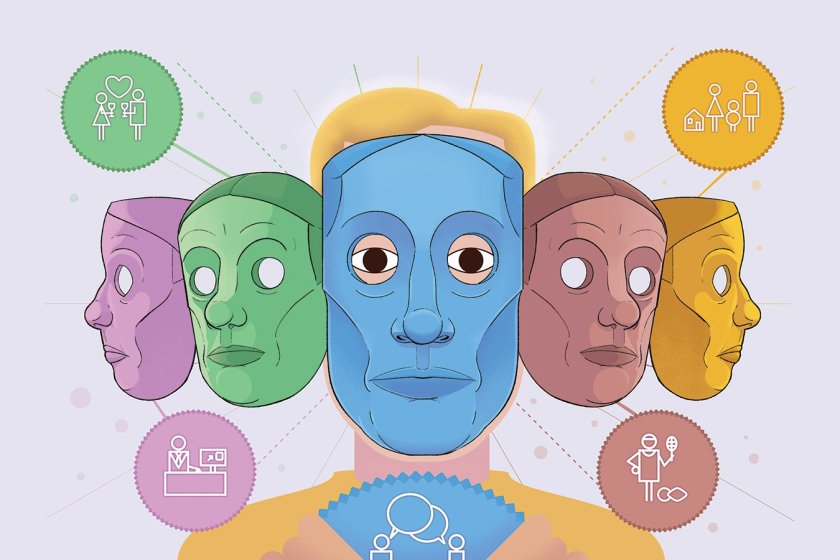
To some extent, we all perform versions of ourselves to fit into different contexts. You might behave differently in the office than you do at home or at a party, for example. But autistic people often hide their true selves to an exhausting degree, such as forcing eye contact or pre-scripting conversations. These strategies, known as masking, help them avoid being spotted as neurodivergent or compensate for when those around them aren’t sympathetic or aware of their needs.
While autistic masking can make it easier to fit in or hold a job, it also takes a toll. It can lead to a disjointed sense of self and makes it harder to get an autism diagnosis, particularly among women, girls and transgender and non-binary people. Autistic people who mask are also more likely to develop substance use disorders, anxiety, depression and suicidal thoughts than those who don’t.
But growing awareness around masking and its impacts can help change that. Devon Price, a social psychologist at Loyola University Chicago, has published several books offering guidance on how autistic people can unmask and live more authentically. New Scientist spoke with Price about how masking differs from person to person, how autistic people can recognise when it no longer serves them and what we all can do to help them in that process.
Advertisement
Thomas Lewton: How did you realise that you were masking, and what was its impact on you?
Devon Price: Like a lot of masked people, it didn’t start as a choice. I didn’t realise I was autistic for the majority of my life. I drilled right through school, because that was where I passed as a functional person. But I struggled socially.
After I finished my PhD in psychology at 25, I burned out. I got really ill. I had a fever every night for nine months. At that time, my cousin was being assessed for autism and asked what I knew about it.
Everything I had learned was that autistics have no social drive, they have no empathy, they are boys obsessed with trains – basic stereotypes. So, I started finding autistic spaces online where they talked about how women and trans and non-binary people mask a lot. I immediately recognised myself. The struggles I had explained away as “I’m just irritable in crowds” or “I just don’t like people and that is why I want to stay home all the time”, I now understand as compensation strategies for sensory overload or executive functioning challenges.
What other strategies do autistic people use when they mask, consciously or not?
Masking strategies generally fall into two camps. One is camouflage, so trying to hide autistic traits. Maybe you self-stimulate by flapping your hands, but suppress that, or you talk to yourself to help process information, but silence that.
Then there are compensation strategies, which try to adjust for a lack of accommodations. For example, an autistic person working full time might spend their free time with the lights out to recover their energy.

Masking also includes compensation strategies, such as recuperating energy in a dark room
Ekaterina Goncharova/Getty Images
I think every autistic person masks differently based on how people see them and what identities, like race or gender, they have. It also depends on what feedback they are getting about what they are doing wrong. An autistic girl talking about her special interests might be told she is talking too much and being selfish. She isn’t doing what a girl is supposed to do – taking an interest in others. If that is feedback you are getting, your mask might look like being an amazing listener.
What often ends up happening is they are trying so hard to not be seen as rude, narcissistic, selfish or oblivious to others – these autistic stereotypes – that they overcorrect to an extreme. They might be really quiet or the life of the party in a fake way. They try to cover up for the stuff that is seen as different. But the result tends to be feeling like you don’t know who you are.
How is masking different from people altering their behaviours according to the social situation?
Everyone masks to a certain extent. It exists on a continuum. Especially in high-stress situations, like workplaces or school, almost everyone is expected to suppress their emotions and rein in how they move through the world.
But for autistics, it is a more dramatic filtering of yourself. It is suppressing behaviours that most people don’t have to – all the time. It is really cognitively taxing and stressful. It’s not the same as smiling and saying you are fine at work when you are having a bad day.
Does masking occur in other forms of neurodivergence, such as ADHD?
There are tons of similarities between autism and ADHD. But ADHD masking looks a bit different. A lot of ADHDers received a message when they were young that they are too impulsive, too loud, too much. This manifests as something called rejection-sensitive dysphoria. They are worried that people are going to reject or abandon them, because they were moving around too much or too quickly and missed a social cue.
A lot of ADHDers lean into social skills they do have. They might get good at charming people or being the class clown. I would say that falls under the umbrella of masking because, to keep people from noticing areas where you struggle, you lean into areas where you get positive attention.
What are the consequences of masking to an extreme degree?
Autistic individuals who mask are more likely to experience substance abuse disorders and self-harm compared with autistic individuals who don’t or can’t mask. They’re more likely to have depression and anxiety disorders and an elevated risk of suicide ideation and suicide attempts.
It also puts them at risk of severe burnout. And we see that the skill drop during autistic burnout is much steeper. They might not be able to feed and dress themselves, go to work or speak.
Can masking also be helpful? I imagine there are reasons why autistic people continue to mask even after becoming aware of its potential harms.
If you have the ability to mask, that does make your life easier in a lot of ways compared with an autistic person who can’t. You are more likely to get housing, get a job, make it through school and have social connections with neurotypical-presenting people. You are less likely to face police violence for behaving “strangely” in public.
Even after an autistic person decides, “OK, maybe I’m doing this too much, maybe it has a negative effect on me”, it is still a skill that they can deploy when they want.
Many autistic people undergo social skills training to help get by in society. Is that a good approach?
A lot of people look at social skills training as being gentler than some of the old treatments like applied behaviour analysis therapy. That therapy is drilling kids to be obedient, to rehearse a social interaction perfectly, whereas social skills training involves explaining to an autistic kid why people behave in this way you might find confusing.
The problem is it still ends up emphasising to autistic people that they need to be almost hypervigilant to others: make sure you are being polite and following social rules to the letter. It isn’t as punitive, but, for many of us, we boomerang to the other side, where we might not feel comfortable sharing an opinion. We might mirror other people in the room and parrot back what they are saying. Many of us develop social scripts. I would watch the TV series Mad Men to learn how people interact in an office environment, which was a horrible idea because it isn’t the 1950s!
What can autistic people do instead of social skills training to help unmask and find their authentic self?
There is no one “self”. We are always changing as people. So I often bring it back to values – are you behaving in a way that lines up with your values?
In my book Unmasking for Life, I put forward different kinds of social skills that go against the idea you need to inhibit yourself. One that is important is engaging in productive conflict. A lot of times, we are afraid to contradict others or be seen as rude. But it is just as essential a skill to collaborating with people to be capable of saying, “I disagree with you”.
Learning to engage in productive conflict comes down to noticing in your body when something feels amiss and, instead of immediately seeing that as a threat, seeing it as something that is important to share. It is about discerning the type of situation or relationship where it is safe to do that. You can’t be getting into arguments with everybody all the time. But if you live with someone, if you work closely with someone, if your relationship really matters, you have to be able to say: “I need this thing”, or “this thing you said hurt”.
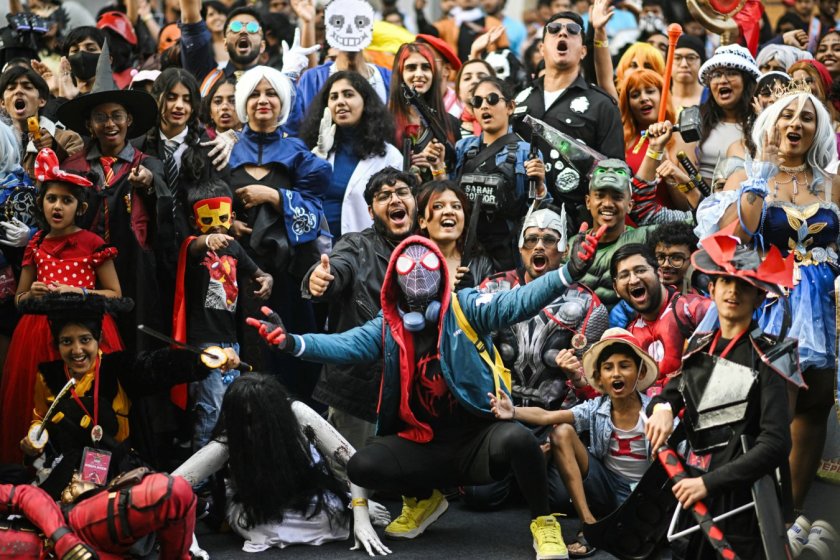
Special-interest groups, such as cosplay meetups, can be safe places to unmask
Idrees MOHAMMED/AFP via Getty Images
Are there any more practical steps that autistic people can take to unmask?
Find your people. That can happen in a bunch of ways. Go beyond social media because there is an array of both reputable and not reputable information there. You can look at groups like the Autistic Self Advocacy Network or Autism Society.
And if seeking out specifically autistic spaces isn’t working, lean into spaces where people who are weird in the same way as you might be. If you go to a comic convention, cosplay group or a lot of metal shows, where people are obsessed with something, often you will find a lot of neurodiversity. After this, I am talking to a documentary film-maker who is covering blindfolded Rubik’s cube solving. Every record holder is diagnosed autistic.
When someone is starting to unmask, what should they expect?
It is often first a relief to just realise you have this disability, and that is why things have been hard. It isn’t because you are lazy or defective. There is an explanation.
There tends to be leaving aspects of the past self behind. Often, relationships are challenged, how a person thinks about themselves is challenged. It can be for the better in the long run and incredibly freeing, but messy along the way.
What lessons are there for non-autistic people who live and work with autistic people?
Question your assumptions is always my first piece of advice. There are lots of things autistic people do that non-autistic people immediately dislike: not making eye contact, moving in an unpredictable way, facial expressions that seem forced or fake. If you notice yourself having some reaction, but you can’t pinpoint anything they are doing that is harming anyone, that is usually a sign you have some expectation of how people are supposed to connect with others.
Bring a spirit of trust to the interactions. If an autistic person asks a question that seems rude, try to assume that they are asking because they need the information, that they aren’t trying to make fun of you or be difficult or pretending to be incapable. Think about what you can do to get barriers out of the way for them.
Need a listening ear? UK Samaritans: 116123; US 988 Suicide & Crisis Lifeline: 988; hotlines in other countries.