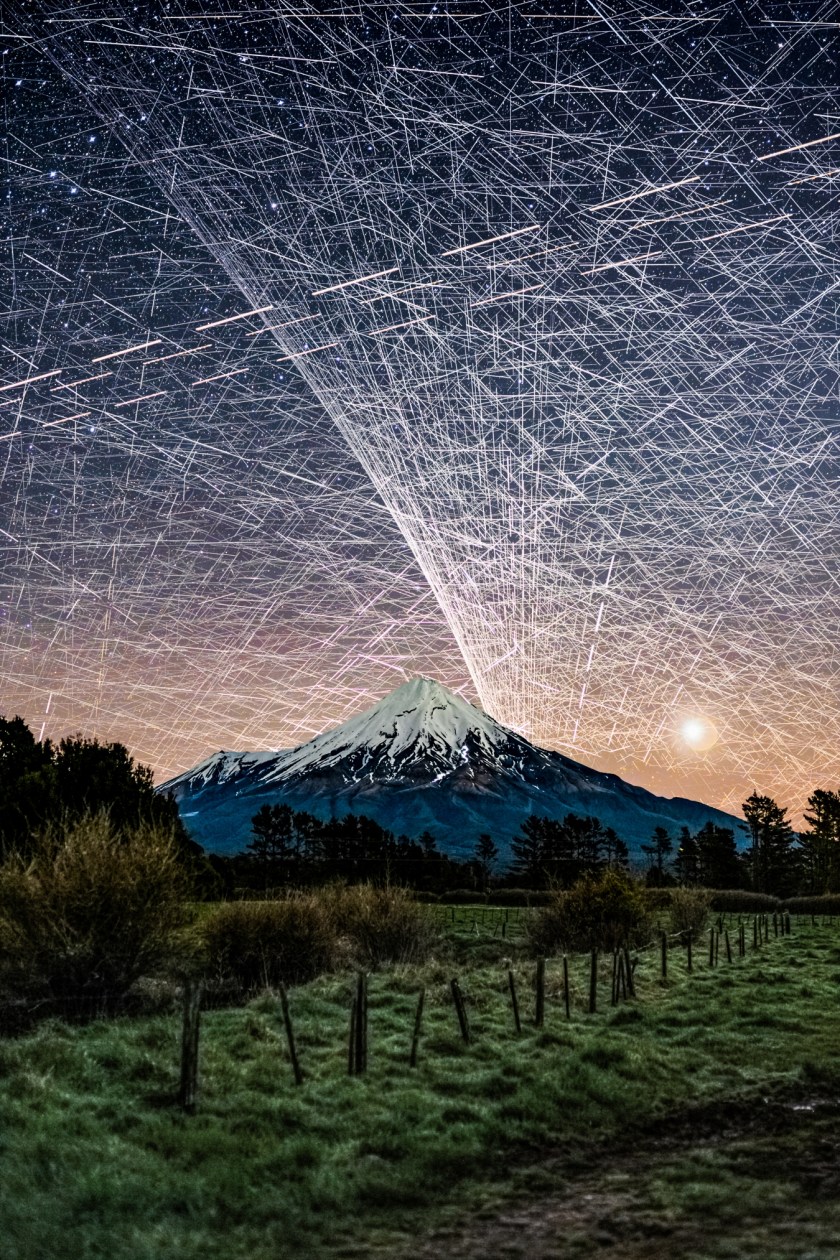
Brendan Larsen combined 578 shots of the night sky, taken over 2 hours, to create this image
Brendan Larsen Photography
When Brendan Larsen, a teacher in New Plymouth, New Zealand, got into astrophotography six years ago, satellites occasionally appeared in his photos. But now, “almost every night-sky photograph I take contains multiple satellite trails”, he says.
To raise awareness of how clogged our skies are becoming, Larsen pointed his camera at Mount Taranaki in New Zealand for almost 2 hours. Afterwards, he spent 45 hours combining the 578 8-second exposures that his camera took during that time to make one image. “I wanted to create an image that would show people, in a single photograph, just how dramatically our night sky is changing,” he says.
The main picture, above, is the composite of all 578 exposures and contains an estimated 14,000 satellite trails. The picture below is a single 8-second exposure, with a few satellite trails.
Advertisement
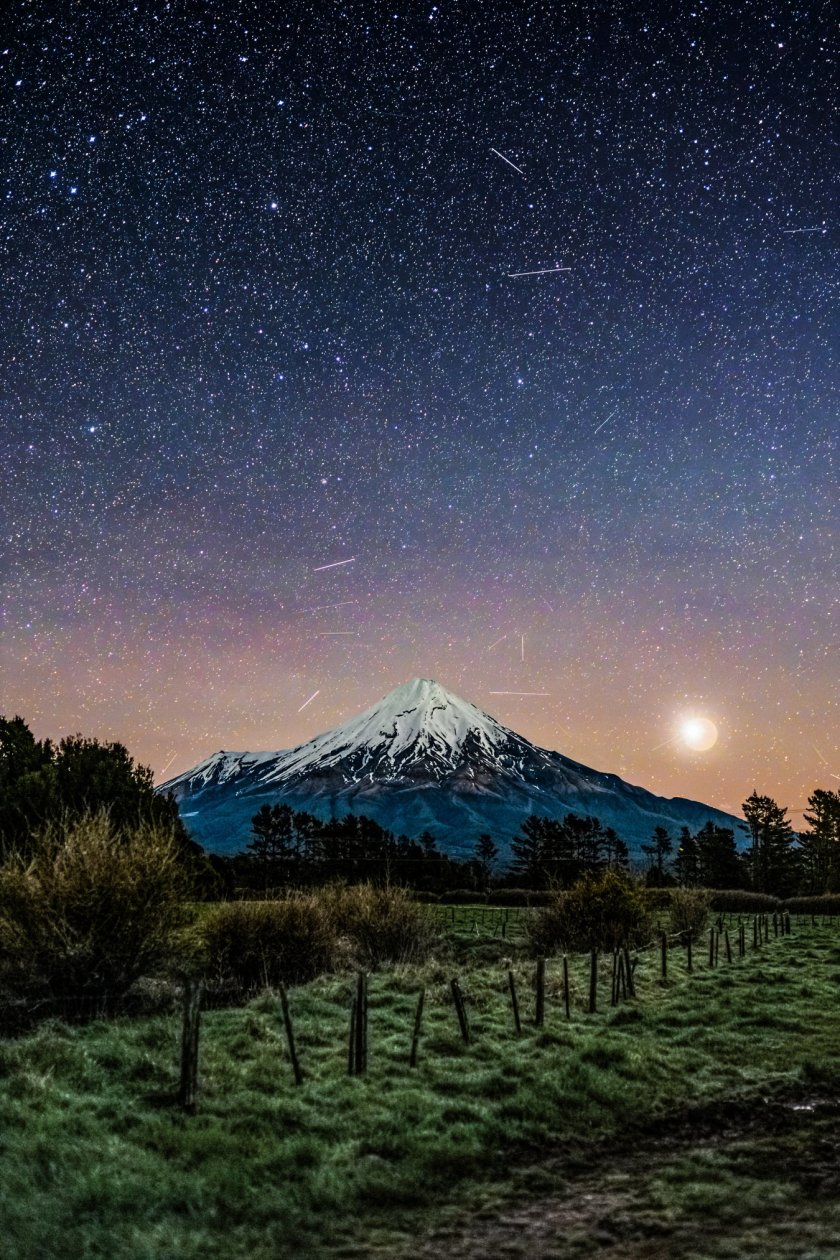
A single 8-second exposure of the night sky over Mount Taranaki in New Zealand
Brendan Larsen Photography
That doesn’t mean 14,000 satellites flew past in 2 hours, because individual satellites appeared in multiple exposures. But the image does illustrate the large volume of satellites now orbiting us. For example, over 9000 satellites have been deployed by SpaceX since 2019 to deliver its Starlink internet service.
Larsen is concerned about the potential environmental impacts of satellites, from disruption of nocturnal animals like bats and moths to impacts on Earth’s atmosphere as the satellites burn up during re-entry at the end of their lifespans. “I recognise that satellites provide valuable services… but I think we need to take the potential long-term environmental consequences of these enormous satellite constellations seriously,” he says.